
What's the Best Order to Withdraw From Retirement Accounts?
One of the most common questions I receive as a financial advisor is:
"Which account should I withdraw from first?"
It's an excellent question, but unfortunately, there isn't a one-size-fits-all answer.
The best withdrawal strategy depends on several factors, including your age, tax bracket, retirement income sources, health insurance needs, future Required Minimum Distributions (RMDs), and even your estate planning goals. A withdrawal strategy that minimizes taxes for one retiree could actually increase taxes for another.
That said, there are common principles that can help guide your decisions.
In this article, I'll explain how different retirement accounts are taxed, why the order of your withdrawals matters, and walk through several real-world retirement scenarios that demonstrate how financial advisors tailor withdrawal strategies to each client's unique circumstances.

There Isn't One "Best" Withdrawal Order
Many retirees search for a simple answer like:
"Spend your brokerage account first."
or
"Always withdraw from your IRA before your Roth."
Unfortunately, retirement income planning isn't that simple.
A successful withdrawal strategy isn't about emptying one account before moving to the next—it's about coordinating withdrawals from multiple accounts in a way that minimizes lifetime taxes while supporting your retirement goals.
When building a retirement income plan, I typically evaluate questions such as:
Will you retire before age 65 and rely on ACA health insurance?
Are large Required Minimum Distributions projected later in retirement?
When do you plan to claim Social Security?
Do you have pension income?
Are you trying to leave assets to your children?
How much flexibility do you want over your taxable income each year?
The answers to these questions often determine which accounts should be used first.
Understanding How Your Retirement Accounts Are Taxed
Before deciding which accounts to withdraw from, it's important to understand how each type of account is taxed. Every withdrawal affects your tax return differently, which is why the order matters so much.
Pre-Tax Retirement Accounts
Examples include:
Traditional IRA
Traditional 401(k)
Solo 401(k)
403(b)
457(b)
Thrift Savings Plan (TSP)
SEP IRA
SIMPLE IRA
Profit Sharing Plans
These accounts were funded with pre-tax dollars, allowing you to receive a tax deduction when contributions were made.
The tradeoff is that every dollar withdrawn is generally taxed as ordinary income.
These accounts are also subject to Required Minimum Distributions (RMDs) beginning at:
Age 73 for individuals born in 1959 or earlier.
Age 75 for individuals born in 1960 or later.
Because withdrawals increase your Adjusted Gross Income (AGI), Modified Adjusted Gross Income (MAGI), and taxable income, they can also affect Medicare premiums, ACA subsidies, and the taxation of Social Security benefits.
Click here to get your FREE electronic copy of: Fiduciary - How to Find, Hire, and Establish an Aligned Trusted Partnership with a Fee-Only Financial Advisor
Roth Retirement Accounts
Examples include:
Roth IRA
Roth 401(k)
Roth accounts are funded with after-tax dollars, meaning qualified withdrawals are generally tax-free.
Unlike Traditional IRAs, Roth IRAs owned by the original account holder are not subject to Required Minimum Distributions, making them an incredibly valuable asset later in retirement.
Because qualified Roth withdrawals do not increase AGI or MAGI, they provide tremendous flexibility when managing taxable income.
Taxable Brokerage Accounts
Examples include:
Individual brokerage accounts
Joint brokerage accounts
Transfer-on-Death (TOD) accounts
Unlike retirement accounts, brokerage accounts have no age restrictions or required withdrawal rules.
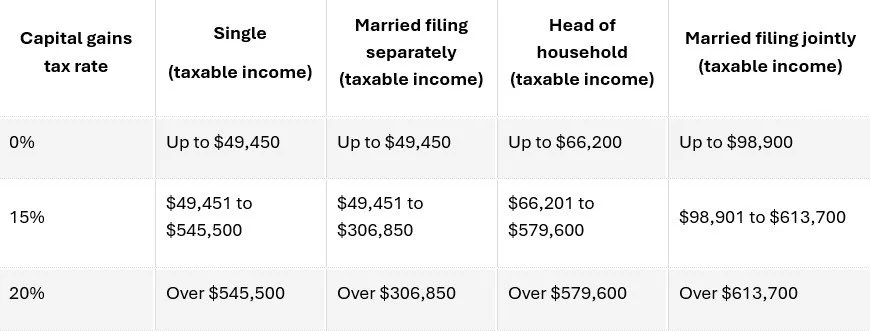
Instead, taxes depend on the amount of capital gains generated when investments are sold.
If investments have been held for more than one year, gains generally qualify for the more favorable long-term capital gains tax rates.
The Brokerage Account Fallacy
One of the biggest misconceptions retirees have is believing that withdrawing $100,000 from a brokerage account creates $100,000 of taxable income.
In reality, only the capital gain is taxable.
For example, suppose Jeff owns stock worth $100,000 that originally cost him $80,000. If he sells the investment, only the $20,000 gain is generally taxable—not the full $100,000.
This tax treatment often makes brokerage accounts an attractive source of retirement income.
Cash, CDs, and Money Market Accounts
Many retirees also maintain savings in:
Money market accounts
Certificates of Deposit (CDs)
High-yield savings accounts
These assets are funded with after-tax dollars.
Withdrawals of principal generally do not create taxable income, although any interest earned is taxable in the year it is is credited.
These accounts often provide flexibility for managing taxable income during retirement.

How to Avoid Taxes on The Sale of Your Primary Residence - Click Here to Learn more
Real-World Examples of Efficient Distribution Plans
Now that we've covered how different accounts are taxed, let's look at three real-world examples.
These scenarios illustrate why the "best" withdrawal strategy changes from one retiree to the next.
Scenario 1: Retiring Before Medicare
Jonathan is a 57-year-old software developer who has accumulated:
$1.5 million in a Traditional 401(k)
$350,000 in a brokerage account
$150,000 in a Roth IRA
$200,000 in a money market account
Let’s assume Jonathan will be fully retired on January 1st, 2027, no longer receiving any health care benefits through his employer, and will be pursuing an ACA premium health care subsidy. Jonathan will need to tailor his income to meet strict modified adjusted gross income limits (MAGI), based on his household size, to retain his affordable health care coverage.
Jonathan may be best suited to leave his 401(k) with his employer, at least until he reaches 59 ½, so that he can take advantage of the rule of 55 (click here to learn more) and take penalty free withdrawals from his 401(k).
From there Jonathan should work with a Financial Advisor to calculate the appropriate mix for where to fund his ongoing living expenses from, so that he does not exceed the ACA premium health care subsidy income limit or deplete his cash, Roth, or brokerage account savings before reaching the age of 65.
This mix should be reviewed and updated each year to ensure it is still the most tax efficient approach and that it considers the changes to the ACA premium health care subsidy income limit.
Scenario 2: Reducing Future RMDs
Walter and Amy are both 62 years old.
They've accumulated:
$4 million in pre-tax retirement accounts
$1 million in brokerage assets
$500,000 in cash
Their primary concern isn't today's taxes—it's the enormous Required Minimum Distributions they'll face in their seventies.
Because they have several years before claiming Social Security, they may choose to fund their living expenses primarily from brokerage assets and cash while using these lower-income years to complete significant Roth conversions.
Although this strategy may increase taxes today, it could substantially reduce lifetime taxes by lowering future RMDs.
Scenario 3: Paying the Least Taxes Possible
Christian is 68 years old and already receiving Social Security.
He has:
$700,000 in pre-tax retirement accounts
$800,000 in a brokerage account
$200,000 in cash
Christian needs an additional $40,000 each year to supplement his retirement income.
Until Required Minimum Distributions begin, he may decide to meet most of this income need through withdrawals from his brokerage account and cash savings.
Because brokerage account withdrawals only create taxable income to the extent capital gains are realized, Christian may be able to generate considerably less taxable income than if he withdrew the same amount from his Traditional IRA.
If Christian's pre-tax accounts were substantially larger, however, the analysis might shift toward larger Roth conversions before RMDs begin.
Again, the "best" withdrawal strategy depends entirely on the facts.
Other Factors That Influence Withdrawal Strategy
Taxes are only one piece of the puzzle.
A comprehensive retirement withdrawal plan should also consider:
Social Security claiming strategies
Medicare IRMAA premium thresholds
ACA premium tax credits
Future Required Minimum Distributions
Legacy and estate planning goals
Sequence of returns risk
Current and future tax law changes
The goal isn't simply paying the least tax this year—it's minimizing lifetime taxes while preserving the longevity of your retirement portfolio.

Final Thoughts
Determining the best order to withdraw from your retirement accounts is one of the most important decisions you'll make after leaving the workforce.
While many retirees hope for a universal withdrawal order, the reality is that the most tax-efficient strategy depends on your unique financial situation. Your retirement income sources, tax bracket, age, healthcare needs, Social Security claiming strategy, and future Required Minimum Distributions should all influence how your retirement income plan is structured.
A withdrawal strategy shouldn't be something you establish once and forget. Tax laws change, markets fluctuate, account balances evolve, and your spending needs will likely shift over time. Reviewing your withdrawal plan annually can help ensure you're continuing to minimize taxes while maximizing the longevity of your retirement assets.
Working with a qualified financial advisor can help you coordinate withdrawals across multiple account types, identify Roth conversion opportunities, manage healthcare-related income limits, and develop a retirement income strategy designed to keep more of your wealth working for you.
As always have a wonderful day,
a better weekend,
and I look forward to writing to you next Friday!
Written by Ryan Morrissey CFP®, CLU®, CHFC®, CMFC
Founder & Principal Advisor of Morrissey Wealth Management
Host of the Retire with Ryan Podcast
_____________________________________________________________________________________________
Frequently Asked Questions
What retirement account should I withdraw from first?
There is no universal answer. The best withdrawal order depends on your tax situation, retirement income sources, age, healthcare needs, and long-term planning goals.
Should I spend my Roth IRA first?
In many cases, retirees preserve Roth assets until later in retirement because qualified withdrawals are tax-free and Roth IRAs are not subject to Required Minimum Distributions during the original owner's lifetime.
Why are brokerage accounts often used early in retirement?
Brokerage accounts may offer favorable long-term capital gains tax treatment, and only the gain—not the full withdrawal amount—is generally taxable.
Should I do Roth conversions before Required Minimum Distributions begin?
For many retirees, the years between retirement and the start of RMDs present an opportunity to complete Roth conversions while remaining in a lower tax bracket. Whether this strategy makes sense depends on your individual circumstances.
Can my retirement withdrawal strategy change over time?
Absolutely. An effective withdrawal strategy should be reviewed regularly to account for changes in tax laws, investment performance, healthcare costs, and retirement income needs.