

What to Do Financially After the Death of a Spouse: A Step-by-Step Guide for Widows and Widowers
Losing a spouse is one of the most difficult experiences anyone can face. Beyond the emotional toll, there are also many financial and administrative responsibilities that need to be addressed.
For many couples, one partner manages the majority of the household finances. When that person passes away, the surviving spouse may suddenly find themselves responsible for managing bills, investments, and financial decisions they’ve never handled before.
This guide walks through the most important financial steps to take after the death of a spouse, from the immediate tasks to the longer-term financial planning decisions.
First: Take Time to Grieve Before Making Major Financial Decisions
Before diving into financial tasks, it’s important to recognize that grief affects decision-making.
Most financial experts recommend waiting 6–12 months before making any major financial decisions, especially those that are difficult to reverse.
Some examples of decisions to avoid rushing into include:
Selling your home
Lending money to family members
Paying off large debts too quickly
Cashing out retirement accounts
Making major changes to investment portfolios
Purchasing complex financial products such as annuities
During this time, focus first on healing and adjusting emotionally before making long-term financial commitments.

Step 1: Obtain Multiple Death Certificates
After funeral arrangements are completed, request multiple certified copies of the death certificate from the funeral home.
You will need these documents to:
Close or transfer financial accounts
Claim life insurance benefits
Notify government agencies
Transfer property ownership
Handle retirement accounts
File insurance claims
It’s common to need 10 or more copies, so ordering several upfront can save time later.
Step 2: Gather Financial Documents
The next step is to organize all financial information for both you and your spouse.
Collect documents related to:
Bank accounts
Investment accounts
Retirement accounts (401(k)s, IRAs)
Stocks, bonds, and mutual funds
Life insurance policies
Mortgage information
Credit cards and debts
Pension statements
Once everything is gathered, it’s helpful to create a net worth statement listing:
Total assets
Total liabilities
Net financial position
This gives you a clear picture of where you stand financially.
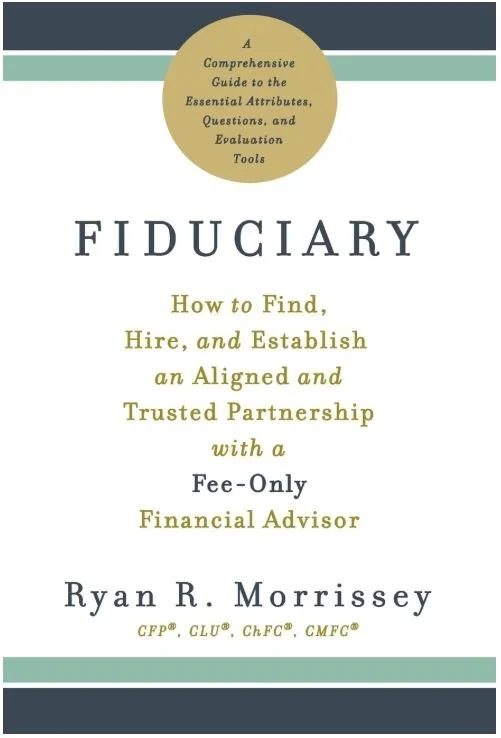
Click here to get your FREE electronic copy of:
Fiduciary - How to Find, Hire, and Establish an Aligned Trusted Partnership with a Fee-Only Financial Advisor
Step 3: Consider Getting Professional Help
If you were not responsible for managing household finances, this can be an overwhelming process.
Two professionals who may be helpful include:
Financial Planner
Working with a fee-only Certified Financial Planner (CFP) can help ensure you receive unbiased financial advice. A fiduciary advisor is legally obligated to act in your best interest.
They can help with:
Investment management
Retirement planning
Social Security decisions
Tax strategies
Budgeting and financial planning
Estate Planning Attorney
An attorney may be necessary if:
Probate needs to be opened
Assets were held in one spouse’s name only
Estate documents must be updated
Step 4: Notify the Social Security Administration
If your spouse was receiving Social Security benefits, you must notify the Social Security Administration.
Surviving spouses may qualify for:
A one-time death benefit of $255
Survivor benefits based on the deceased spouse’s earnings record
Survivor benefits can begin as early as age 60 (or 50 if disabled).
However, if you are still working, your benefit may be reduced depending on your income.
For example:
If collecting before full retirement age, benefits are reduced if earnings exceed the annual limit.
Once you reach full retirement age, there is no earnings limit.
In some cases, a surviving spouse may choose to:
Collect the survivor benefit first
Allow their own benefit to grow
Switch to their own higher benefit later
This strategy can significantly increase lifetime Social Security income.

Click here to listen to this week’s episode on: 7 Common Tax Filing Mistakes to Avoid this tax season (2026)
Step 5: Contact Life Insurance Companies
If your spouse had life insurance, contact the insurance company to file a claim.
You will typically need to provide:
A certified death certificate
Policy information
Claim forms
Life insurance proceeds can usually be received as:
A lump sum payment
A settlement account
An annuity-style payout over time
Many people choose the lump sum option and deposit the funds into a bank account until they determine the best long-term plan.
Step 6: Review Pension Benefits
If your spouse had a pension, notify the pension administrator.
Many pensions include joint-and-survivor options, meaning the surviving spouse continues receiving benefits.
Depending on the plan structure, the benefit may be:
100% of the original payment
50% or 75% of the original payment
A different reduced survivor benefit
Understanding the new income level is important for rebuilding your financial plan.
Step 7: Continue Paying Important Bills
Make sure critical expenses continue to be paid, including:
Mortgage payments
Utility bills
Insurance premiums
Property taxes
Car loans
Health insurance
Setting up automatic bill payments can simplify this process and reduce the risk of missed payments or late fees.
Step 8: Be Careful With Your Spouse’s Debts
If debts were in your spouse’s name only, you may not be responsible for paying them.
This is especially common with credit card debt.
Because the rules vary by state, consult an estate attorney before paying off debts that were not jointly held.
Step 9: Transfer Joint Accounts Into Your Name
Joint accounts typically transfer easily to the surviving spouse.
Common examples include:
Joint bank accounts
Joint brokerage accounts
Joint investment accounts
Financial institutions usually require a death certificate to complete the transfer.
Step 10: Understand Your Options for Inherited Retirement Accounts
If your spouse had retirement accounts such as a 401(k) or IRA, you generally have two main options:
Option 1: Roll the Account Into Your Own IRA
This option may make sense if:
You are over age 59½
You want to delay required minimum distributions (RMDs)
Option 2: Open a Spousal Beneficiary IRA
This may be beneficial if:
You are under age 59½
You may need access to the funds
Beneficiary IRAs allow withdrawals without the 10% early withdrawal penalty, which can provide flexibility.
Step 11: File Your Spouse’s Final Tax Return
Even in the year someone passes away, a tax return must still be filed for income earned that year.
This may involve:
Filing a final joint tax return
Reporting income through the date of death
Claiming applicable deductions
Many surviving spouses choose to work with a CPA or tax professional to ensure this is done correctly.
Step 12: Create or Update Your Budget
Your financial situation may change significantly after losing a spouse.
You may experience:
Reduced household income
Different living expenses
New financial responsibilities
Creating a new household budget can help you understand your financial stability and make adjustments if necessary.
Step 13: Determine Whether Probate Is Necessary
Probate is the legal process of settling a deceased person’s estate.
In some situations, probate may not be required if:
Assets were jointly owned
Beneficiaries were listed on accounts
Assets were held in a trust
An estate attorney can help determine whether probate is necessary in your situation.
Longer-Term Financial Planning Steps
After the immediate financial tasks are handled, there are several long-term planning steps to consider.
These include:
Updating Beneficiaries
Review beneficiaries on:
Retirement accounts
Life insurance policies
Investment accounts
You may need to name new primary or contingent beneficiaries.
Updating Estate Documents
Important documents to review include:
Your will
Trust documents
Financial power of attorney
Healthcare proxy
Considering Long-Term Care Insurance
Without a spouse to help provide care later in life, long-term care insurance may become more important.
Evaluating Life Insurance Needs
If you have dependent children or family members relying on your income, life insurance may still be necessary.
Should You Downsize Your Home?
Many widows and widowers eventually consider downsizing.
Reasons may include:
Reduced income
Less maintenance
Excess living space
Desire to free up home equity
However, avoid making this decision too quickly.
One important tax consideration is the capital gains exclusion on a primary residence.
Married couples can exclude up to $500,000 in gains when selling a home. After a spouse passes away, the surviving spouse can still use the full $500,000 exclusion if the home is sold within two years.

Final Thoughts
The death of a spouse is both emotionally and financially overwhelming. While there are many tasks to handle, approaching them step by step can make the process more manageable.
Focus first on the immediate necessities, take time to grieve, and seek professional help if needed.
With the right support and guidance, it’s possible to regain financial clarity and build a stable plan for the future.
Written by Ryan Morrissey CFP®, CLU®, CHFC®, CMFC
Founder & Principal Advisor of Morrissey Wealth Management
Host of the Retire with Ryan Podcast