A common question I get when people find out what I do for a living is, "What are the best ways to save for retirement?" Well, in today’s post, I’m going to dive into three of the top retirement saving strategies that I recommend, along with the pros and cons of each. Let’s break them down so you can decide which method fits your needs best.
1. Traditional 401(k)
If you have access to a 401(k) plan through your employer, you’re probably already contributing to it. But if you’re still not sure about its benefits, here’s why this is one of the top ways to save for retirement.
Pros:
Employer Match: One of the biggest perks is the employer match. Depending on your company, they might match up to 3% or even more. This is essentially free money, so if you’re not taking advantage of the match, you’re missing out.
Automatic Payroll Deductions: Contributions to your 401(k) are automatically deducted from your paycheck. You choose a percentage or dollar amount, and the rest is handled for you — it’s a “set it and forget it” system that makes saving effortless.
Consolidation of Retirement Plans: If you’ve had previous jobs with 401(k)s or IRAs, you can consolidate those accounts into your current 401(k). This simplifies your retirement savings and keeps everything in one place.
Loan Options: Some 401(k) plans allow you to borrow against your account. If you need funds for major life events like buying a home or paying for education, this could be an option.
ERISA Protection: Your 401(k) is protected by the Employee Retirement Income Security Act (ERISA). This law ensures that your account is safe in case your company goes bankrupt.
Fiduciary Responsibility: Your employer is legally required to act in your best interest when managing the plan, ensuring that fees and investment options are reasonable.

If you prefer to learn in video format. Make sure to check out my YouTube channel! Don’t forget to subscribe!
Cons:
Contribution Limits: The contribution limit for a 401(k) is $23,500 for most people, with an additional $7,500 if you're over 50. If you're looking to save more, you’ll need to explore other options, like a Roth IRA.
Early Withdrawal Penalties: You can’t access your 401(k) money until you're 59 ½ without incurring penalties (except for certain situations like loans or hardship withdrawals).
High Fees: Not all 401(k) plans are created equal. Some may have high fees, which can eat into your returns over time. Be sure to check your plan's investment options and administrative fees.
Required Minimum Distributions (RMDs): Once you hit age 73 (or 75 in 2033), you’re required to start withdrawing money from your 401(k), whether you need it or not. And those withdrawals are taxed as ordinary income.

2. Roth IRA
A Roth IRA is a great retirement savings tool that’s particularly beneficial if you want tax-free growth. Here’s why this might be the right option for you.
Pros:
Tax-Free Growth: The biggest benefit of a Roth IRA is that all the gains you make grow tax-free. As long as you follow the rules — taking out funds after 59 ½ and having the account open for at least five years — your contributions and earnings are tax-free when withdrawn.
Wide Range of Investment Options: With a Roth IRA, you can invest in virtually anything — stocks, bonds, mutual funds, ETFs, and more. Providers like TD Ameritrade and Charles Schwab offer a wide range of low-cost investments, so you can tailor your portfolio to fit your goals.
No Required Minimum Distributions (RMDs): Unlike a 401(k), Roth IRAs don’t require you to take minimum distributions at age 73 (or 75 in 2033). You can leave the money in the account as long as you want, which makes it a great tool for estate planning.
No Penalties on Contributions: You can withdraw your contributions (but not your earnings) at any time without penalties or taxes. This offers flexibility if you need to access funds before retirement.
Cons:
No Immediate Tax Deduction: Because Roth IRA contributions are made with after-tax dollars, you don’t get a tax break when you contribute. But the trade-off is the tax-free withdrawals in retirement.
Income Limits: Roth IRAs have income limits. For single filers, you can only contribute if your modified adjusted gross income is below $150,000. For married couples filing jointly, the limit is $236,000.
Contribution Limits: The annual contribution limit for Roth IRAs is $7,000 for those under 50, or $8,000 for those over 50. While this amount may increase slightly over time, it’s still lower than the contribution limits for other accounts.
Withdrawal Restrictions: To avoid penalties and taxes on your earnings, you need to be 59 ½ and have the account open for at least five years. So, it’s not an option if you want quick access to your funds.
3. Health Savings Account (HSA)
A Health Savings Account (HSA) may not be the first thing that comes to mind when thinking about retirement savings, but hear me out. This account offers triple tax benefits and can be a fantastic supplement to your retirement savings strategy.
Pros:
Triple Tax Benefits: Contributions to an HSA are tax-deductible, your investments grow tax-free, and withdrawals used for qualified medical expenses are also tax-free. It’s the only account that offers this unique triple tax advantage.
Portability and Flexibility: HSAs are yours to keep even if you change jobs or retire. The money stays with you for life, and you can use it for future medical expenses or save it as an additional retirement account.
Employer Contributions: Many employers offer HSA contributions in addition to your own, which is like free money — just like a 401(k) match.
Investment Options: Some HSA providers allow you to invest your funds in stocks, bonds, and mutual funds, just like a 401(k).
Reimbursement Flexibility: You can reimburse yourself for qualified medical expenses at any time. So if you have health expenses now but don’t need the money yet, you can wait and let the account grow before reimbursing yourself.
Cons:
High Deductible Health Plan Requirement: To open an HSA, you must be enrolled in a high-deductible health plan (HDHP). These plans often have higher out-of-pocket costs, which could be a drawback if you don’t already have one.
Contribution Limits: For 2025, the contribution limit for an individual is $4,150 and $8,300 for a family. While there’s a catch-up contribution of $1,000 if you're over 55, the limits are still lower than other retirement accounts.
Penalties Before Age 65: If you take money out for non-medical expenses before 65, you'll face a 20% penalty plus taxes. After 65, you can withdraw funds for any reason without a penalty, but non-medical withdrawals will be taxed as income.
Tracking Medical Expenses: To make the most of your HSA, you’ll need to track your medical expenses and keep good records in case you ever get audited by the IRS.
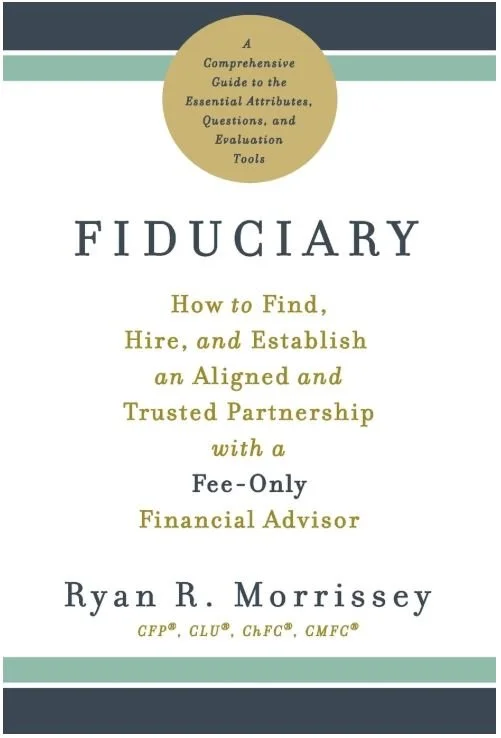
Shipped to your door!
Available on Amazon Marketplace (click the image)
Final Thoughts
When it comes to retirement planning, the best strategy is often a combination of accounts to diversify your tax treatment and investment options. Whether you’re already contributing to a 401(k), looking into a Roth IRA, or considering an HSA, each option has its own set of advantages and limitations. The key is understanding how each account works and which fits best with your financial goals.
If you have a question or topic that you’d like to have considered for a future episode/blog post, you can request it by going to www.retirewithryan.com and clicking on ask a question.
As always, have a great day, a better week, and I look forward to talking with you on the next blog post, podcast, YouTube video, or wherever we have the pleasure of connecting!
Written by Ryan Morrissey
Founder & CEO of Morrissey Wealth Management
Host of the Retire with Ryan Podcast